Summary: DTCP (Directorate of Town and Country Planning) is a government authority that approves land layouts and regulates urban development. For property buyers in Hyderabad, DTCP approval ensures that a plot or project follows legal zoning rules, proper road access, and infrastructure standards. Buying in a DTCP-approved layout reduces risks related to illegal land, disputes, and future development issues, making it a safer and more secure real estate investment.
Buying a plot around Hyderabad is exciting but also scary. Somewhere between the site visit, the chai with the sales guy, and the “last few plots left” pitch, there’s one simple question that decides whether you’ll sleep peacefully or stay worried: Is this layout properly approved—DTCP, HMDA, or something else?
Today, let’s talk about DTCP in simple language and how it actually protects you as a property buyer in and around Hyderabad.
That nervous feeling before buying land
Imagine this.
Ravi and his wife have been saving for years to buy a plot near Hyderabad. It’s their “one big dream”—maybe a villa later, or at least a secure investment for their kids. The layout looks beautiful on paper: wide roads in the brochure, green parks in the 3D images, and of course, “future growth” written everywhere.
But when Ravi sits with his family at night, one doubt won’t leave his mind:
“What if this layout is not legally safe? What if I’m making a mistake?”
This fear is totally normal. Most first-time buyers feel exactly like this but are too shy to ask questions. That’s where understanding DTCP can give you emotional peace and legal protection.
What is DTCP, in simple words?
DTCP stands for Directorate of Town and Country Planning a state-level government department that looks after planned development in many parts of Telangana and other states.
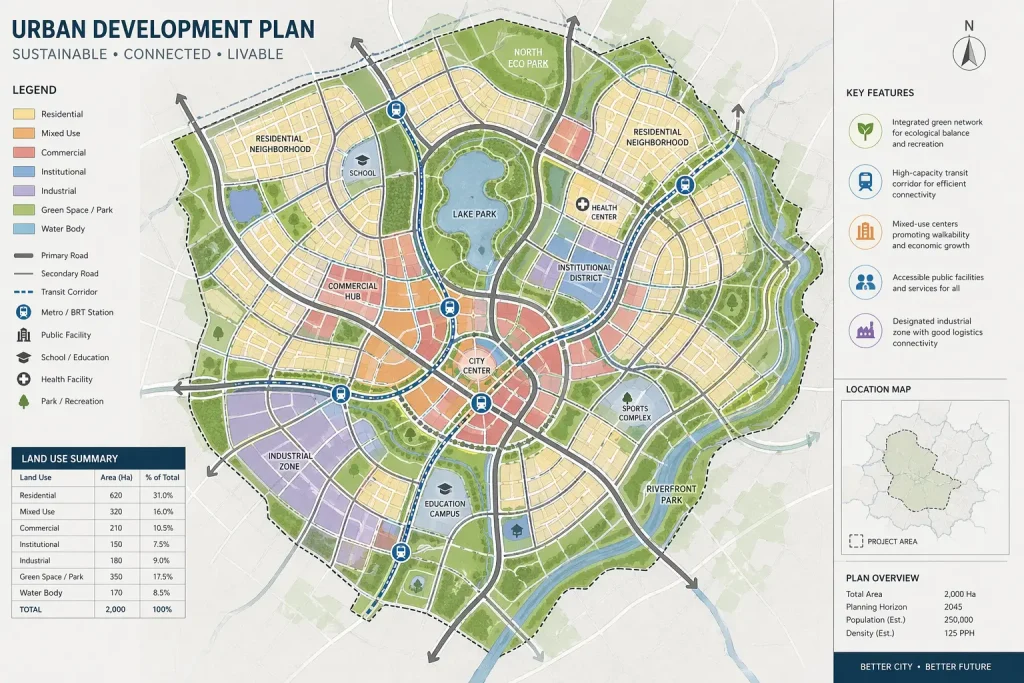
Instead of letting people cut random plots and sell them however they want, DTCP creates rules for how layouts should be planned covering things like road width, open spaces, drainage, and basic infrastructure.
In Telangana, DTCP mainly handles planning and layout approvals in towns, semi-urban, and rural areas that fall outside the main metropolitan development authority limits like HMDA.
Where does DTCP apply around Hyderabad?
Inside the core Hyderabad metropolitan area, planning and approvals are typically handled by HMDA (Hyderabad Metropolitan Development Authority).
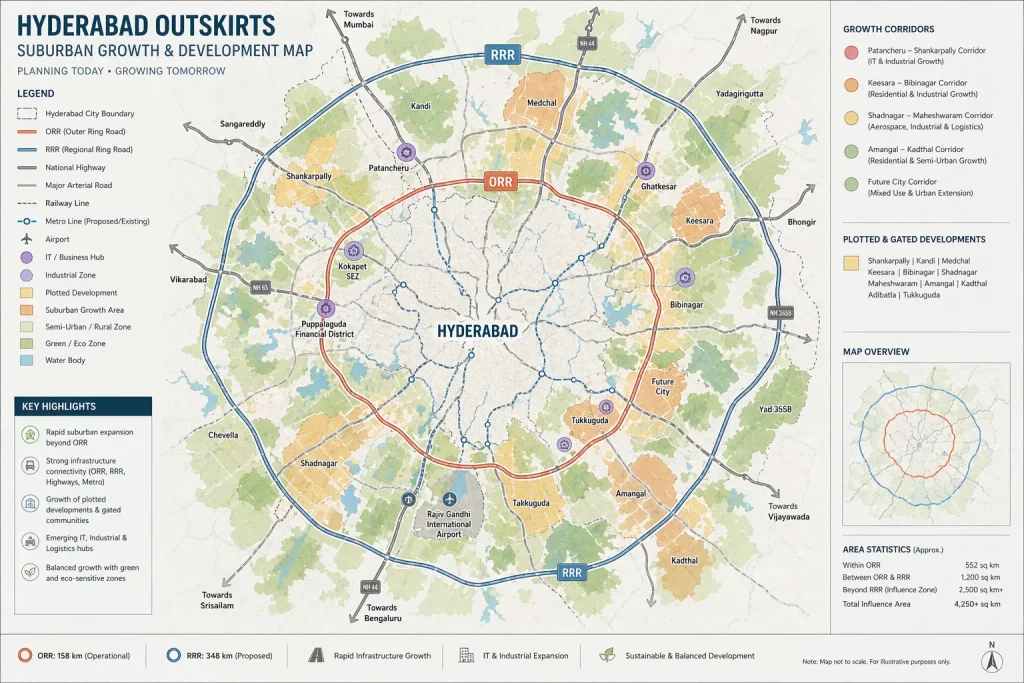
But once you move towards outer ring road regions, peripheral villages, and upcoming suburban locations beyond the main HMDA zone, many plotted developments come under DTCP’s jurisdiction.
So if you’re looking at more “affordable” plots on the outskirts with long-term growth potential, there’s a good chance the board or brochure will mention “DTCP-approved layout” instead of HMDA.
What does a DTCP-approved layout actually mean?
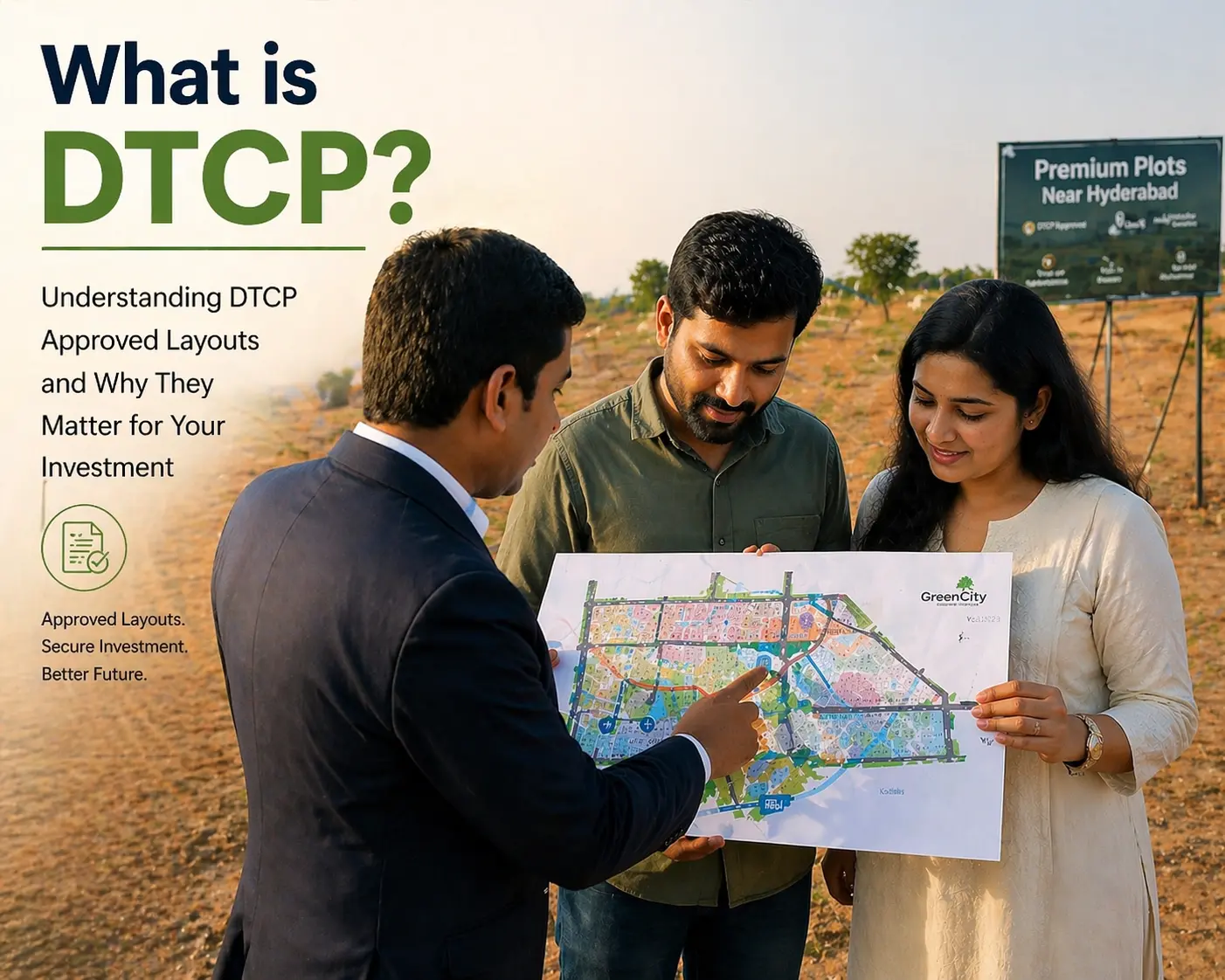
When a developer wants to convert a big piece of land into a plotted layout, they cannot legally just draw lines on a piece of paper and start selling plots.
For areas under its control, DTCP must approve the layout first, confirming that it follows planning rules such as: minimum layout size, proper internal road widths, open space and green area allocation, and basic drainage and infrastructure standards.
A DTCP-approved layout simply means the state planning authority has officially sanctioned the plan, instead of it being an informal or random plotting by the developer.
Why DTCP approval matters for buyers’ peace of mind
For a lot of buyers, “DTCP-approved” sounds like a technical term. But in reality, it connects deeply with things you emotionally care about: safety, security, and your family’s future.
Here’s how DTCP approval helps you as a buyer in and around Hyderabad:
- Legal safety and title clarity: A DTCP-approved plot means the layout has gone through legal checks and follows planning norms, giving you a stronger base for clear title and safer registration.
- Better chances of bank loans: Banks are more comfortable funding plots in approved layouts, because they know the project follows government rules and is not an unauthorized development.
- Support for future resale and appreciation: Since DTCP ensures the layout follows proper standards, such properties generally enjoy better resale value and long-term appreciation compared to unapproved or irregular layouts.
- Basic infrastructure is not just a promise: DTCP rules cover aspects like roads, open spaces, and drainage, so the layout is not just a random mix of plots but part of a planned development framework.
- Transparent, verifiable approvals: DTCP-approved layouts have specific approval details (like LP numbers) that can be cross-checked, helping you avoid fake promises and misleading marketing.
In short: DTCP may sound like a technical department, but its impact shows up in your everyday peace of mind as a buyer.
DTCP vs HMDA: where most buyers get confused
If you’re searching for plots around Hyderabad, you’ve probably heard both terms DTCP and HMDA and wondered, “Which one is better?”
Here’s a simple, buyer-friendly view:
| Aspect | DTCP | HMDA |
| Full form | Directorate of Town and Country Planning. | Hyderabad Metropolitan Development Authority. |
| Area covered | Mostly smaller towns, semi-urban and rural areas outside Greater Hyderabad core limits. | Hyderabad metropolitan region and surrounding urban areas under GHMC/HMDA limits. |
| Typical locations | Outer ring road regions, peripheral villages, upcoming suburban growth corridors. | City and fast-developing urban zones, closer to IT hubs and major infrastructure. |
| Pricing trend | Generally more budget-friendly entry cost; good for long-term investors. | Usually costlier due to better existing infrastructure and higher demand. |
| Growth pattern | Slower initial growth but strong potential near highways/industrial or growth zones. | Faster appreciation because of city connectivity and urban development. |
| Approval nature | Focus on planned development in non-metro areas; approvals often a bit more flexible. | Stricter approvals with higher standards for roads, open spaces, and civic amenities. |
Both DTCP and HMDA-approved layouts are legal; the “best” one for you depends on your budget, location preference, and whether you want faster returns or patient, long-term growth.
A small story: two friends, two different plots
Let’s come back to real life.
Ravi and his friend Sameer both decide to buy plots near Hyderabad. Sameer finds a very cheap layout that’s “just GP approved” (only local panchayat), with no mention of DTCP or HMDA. The sales guy says, “Bhai, approvals sab ho jayenge baad mein, abhi rate kam hai.”
Ravi, on the other hand, chooses a layout with proper DTCP approval. He asks for the layout plan with the LP number, checks the documents, and takes a little extra time to verify things.
Fast forward a few years:
- Sameer struggles when he tries to take a bank loan to build a house the bank raises objections because the layout doesn’t have proper planning authority approval.
- The internal roads in his layout are narrower than promised, and some open space has been quietly converted into extra plots.
- Ravi, meanwhile, finds it easier to get his loan processed and notices that new development is slowly coming around his layout because it’s part of a planned growth corridor.
Same price range, same city, same dream—very different outcomes.
That’s the emotional power of one decision: choosing a properly approved layout.
How DTCP quietly protects your everyday life
The beauty of DTCP is that, if it does its job well, you may not even notice it. You’ll just feel that things are “in order”:
- Roads inside the layout are reasonably aligned and wide enough for future traffic.
- There is at least some open space or park area reserved instead of every inch being sold as a plot.
- Drainage planning reduces waterlogging risk during heavy rains.
- Your chances of future road widening or layout disputes are lower compared to totally unplanned areas.
All these things are not just about concrete and land—they are about how safely your kids can play, whether your car can move easily, and how stress-free your life can be in that location.
Simple checklist before you say “yes” to a DTCP plot
Before booking any DTCP-claimed plot around Hyderabad, pause and check a few basics:
- Ask for the DTCP-approved layout plan and LP number: Don’t rely only on brochures; ask the developer to show the official DTCP approval copy and make sure the LP number is clearly visible.
- Verify that the layout is really DTCP-approved: Cross-check the details with the developer, and where possible verify through official channels or from trusted real estate professionals familiar with DTCP norms.
- Match the site with the approved plan: Visit the site and see whether roads, parks, and open spaces on the ground match what’s shown in the DTCP plan instead of just believing marketing material.
- Check approach roads and surroundings: Even if the internal layout is DTCP-approved, look at how you enter the layout, nearby developments, and long-term growth potential suggested by infrastructure and connectivity.
- Don’t judge only by price and brochures: Low price and fancy 3D images are tempting, but experienced real estate professionals in Telangana repeatedly advise prioritizing proper approvals, LP number, and compliance with road and open space rules over discounts.
These steps take a little extra time now but can save you years of stress later.
Closing thoughts: your dream deserves due diligence
Buying a plot is not just a transaction; it’s an emotional milestone. It carries your dreams of security, pride, and a better future for your family.
DTCP approval may sound like a dry government term, but in reality, it is one of the shields standing between you and potential legal or financial headaches. When you insist on understanding approvals DTCP or HMDA you’re not being “too cautious”; you’re being a responsible guardian of your family’s future.
So the next time you visit a site near Hyderabad, don’t feel shy to ask:
“Is this layout DTCP or HMDA approved? Can you show me the approval copy and LP number?”
That one confident question can turn your fear into clarity—and your dream plot into a genuinely safe and smart decision.