
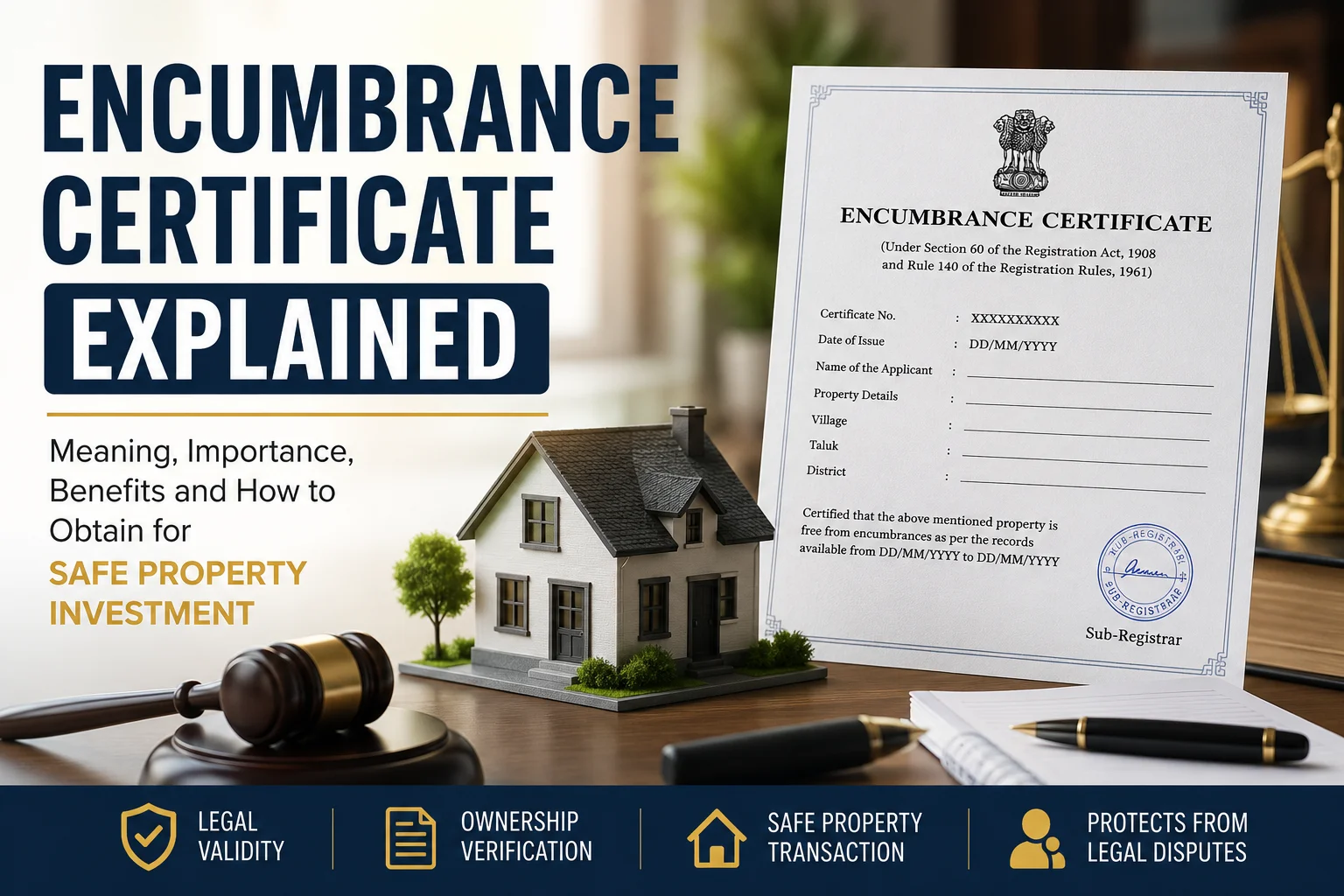
Buying property is one of the biggest financial decisions most people make. Whether you’re purchasing a villa, apartment, residential plot, or commercial space, verifying legal ownership is critical.
Unfortunately, many buyers focus only on price, location, and amenities while overlooking an essential document the Encumbrance Certificate (EC).
Imagine spending your life savings on a property only to discover later that it has an outstanding loan or legal liability attached to it. That’s exactly why an Encumbrance Certificate plays such a vital role in real estate transactions.
In this guide, we’ll explain everything about the Encumbrance Certificate, including its meaning, importance, benefits, application process, and how it helps protect property buyers from costly mistakes.
What Is an Encumbrance Certificate (EC)?
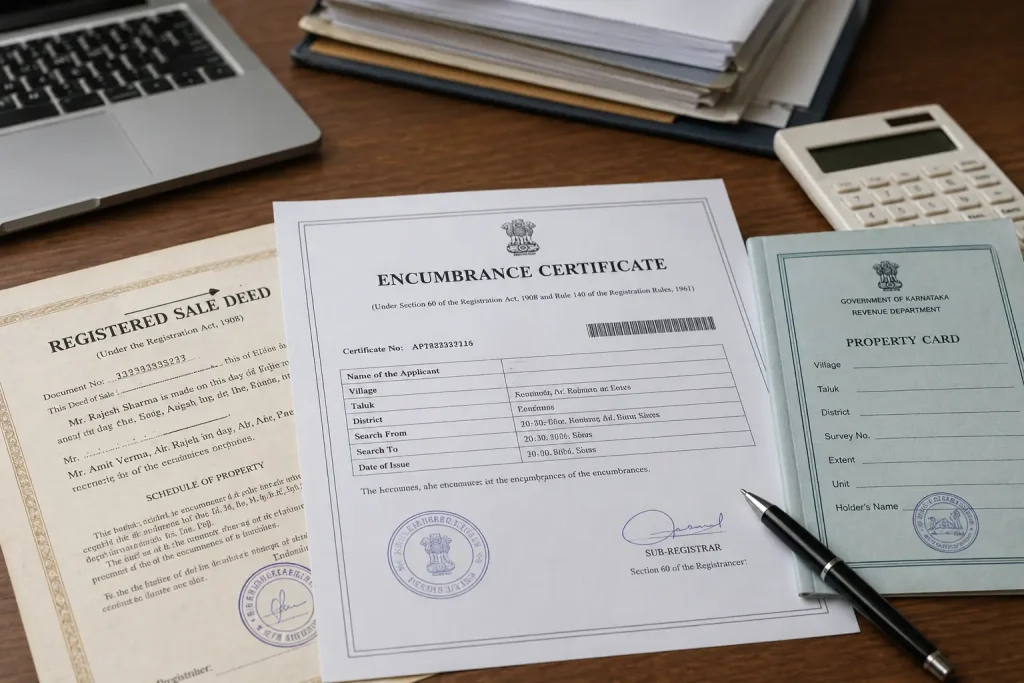
An Encumbrance Certificate (EC) is an official document issued by the Sub-Registrar’s Office that records all registered transactions related to a property during a specified period.
In simple terms, the certificate helps determine whether a property is free from legal and financial liabilities.
An EC Can Reveal:
- Property ownership history
- Registered sale transactions
- Mortgage records
- Gift deeds
- Release deeds
- Property-related financial obligations
The primary purpose of an Encumbrance Certificate is to help buyers verify that the property has a clear and marketable title.
What Does the Term “Encumbrance” Mean?
The word encumbrance refers to any claim, charge, liability, or restriction attached to a property.
Common examples include:
- Home loans
- Mortgages
- Legal claims
- Financial charges
- Registered disputes
An Encumbrance Certificate helps identify such registered liabilities before a property transaction takes place.
Why Is an Encumbrance Certificate Important?

Many property buyers consider the EC one of the most important documents in property verification.
- Verifies Property Ownership: The certificate provides details of registered ownership transfers and transactions, helping buyers confirm ownership records.
- Identifies Existing Mortgages: If a property has been mortgaged to a bank or financial institution, the transaction is generally reflected in the EC.
- Essential for Home Loan Approval: Banks often request an Encumbrance Certificate before approving a housing loan.
- Helps Avoid Legal Risks: Reviewing the EC can help uncover potential legal complications related to registered transactions.
- Supports Safe Property Investment: A properly verified EC gives buyers greater confidence before investing large sums in real estate.
A Real-Life Story: How an EC Saved a Buyer from Trouble

Ravi, a software professional in Hyderabad, found a plot that appeared perfect.
The location was excellent, the price was attractive, and the seller seemed genuine.
Before finalizing the deal, Ravi’s lawyer requested an Encumbrance Certificate.
Upon verification, they discovered that the property had a registered mortgage that had not yet been cleared.
The transaction was paused until the seller resolved the issue.
A simple document check saved Ravi from a potentially expensive legal complication.
Lesson: Never purchase property without verifying the Encumbrance Certificate.
What Information Is Included in an Encumbrance Certificate?
An EC typically contains the following information:
Property Details
- Survey number
- Property description
- Location details
Ownership Information
- Current owner’s name
- Previous owners (based on registered transactions)
Transaction History
- Sale deeds
- Gift deeds
- Release deeds
- Mortgage deeds
Registration Details
- Document numbers
- Registration dates
- Parties involved
This information provides a clear picture of the property’s registered transaction history.
Types of Encumbrance Certificates
There are generally two types of EC documents issued in India.
Form 15 – Encumbrance Certificate
Form 15 is issued when registered transactions exist during the requested search period.
It includes:
- Property transfers
- Mortgage entries
- Ownership changes
- Financial transactions
Form 16 – Nil Encumbrance Certificate
A Nil Encumbrance Certificate is issued when no registered transactions are found during the selected period.
This indicates that no registered encumbrances were identified in the official records searched.
How to Get an Encumbrance Certificate in India
Depending on your state, you can obtain an EC either online or offline.
Offline Process
Step 1: Visit the Sub-Registrar Office
Go to the jurisdictional Sub-Registrar Office where the property is registered.
Step 2: Submit an application
Provide:
- Property details
- Survey number
- Owner information
- Required search period
Step 3: Pay the Applicable Fee
The fee varies based on state regulations and search duration.
Step 4: Verification Process
Officials search the registration records related to the property.
Step 5: Collect the EC
Once verification is complete, the Encumbrance Certificate is issued.
How to Get an Encumbrance Certificate Online
Many Indian states now provide digital EC services.
Online Application Process
- Visit your state’s registration department website.
- Select Encumbrance Certificate services.
- Enter property details.
- Upload required information.
- Pay the application fee.
- Download the certificate after approval.
Online services have significantly simplified property document verification.
Documents Required for an Encumbrance Certificate
Applicants may need:
- Property address
- Survey number
- Registered deed details
- Owner details
- Identity proof
- Application form
Requirements may vary slightly from state to state.
Encumbrance Certificate vs Sale Deed
Many first-time property buyers confuse these documents.
| Sale Deed | Encumbrance Certificate |
| Proof of ownership transfer | Proof of transaction history |
| Created during property sale | Issued by registration authority |
| Establishes ownership rights | Shows registered liabilities |
| One-time legal document | Can be obtained anytime |
Both documents are essential during property verification.
Common Myths About Encumbrance Certificates
- Myth #1: A Clean EC Means Zero Risk: Reality: An EC only shows registered transactions. Certain legal disputes or unregistered agreements may not appear.
- Myth #2: Only Buyers Need an EC: Reality: Sellers, banks, developers, and investors also rely on EC verification.
- Myth #3: EC Alone Is Enough: Reality: Buyers should also verify title deeds, tax receipts, approvals, and legal records.
Tips Before Buying Property
Before making any property investment:
- Verify the Encumbrance Certificate: Review transaction history carefully.
- Match EC Details with Sale Documents: Ensure consistency across all records.
- Consult a Property Lawyer: Professional legal review is highly recommended.
- Verify Property Tax Records: Check whether taxes are up to date.
- Review Title Documents: Confirm ownership and legal status.
Following these steps can significantly reduce investment risks.
Frequently Asked Questions (FAQs)
While not always legally mandatory, it is strongly recommended and often required by lenders.
Legal experts commonly suggest reviewing 15 to 30 years of records whenever possible.
Yes. Many state registration departments offer online EC services.
An EC helps verify ownership history but should be reviewed alongside title documents and sale deeds.
Additional verification should be conducted to ensure the loan has been fully cleared and released.
Conclusion
An Encumbrance Certificate is one of the most important documents in any real estate transaction. It helps buyers verify ownership history, identify registered liabilities, and make informed investment decisions.
Whether you’re purchasing a residential plot, apartment, villa, or commercial property, obtaining an EC should always be part of your due diligence process.
In real estate, the safest investments are made after careful verification not assumptions.
Before signing any property agreement, make sure you review the Encumbrance Certificate. It could save you from significant financial and legal challenges in the future.