Hyderabad’s real estate market has seen rapid growth driven by IT expansion, infrastructure projects, and steady migration from other regions. As the city grows, homebuyers increasingly choose between gated communities and independent houses in areas under GHMC and HMDA. Both options offer distinct advantages in terms of security, lifestyle, flexibility, and long‑term appreciation, so the right choice depends on your budget, family needs, and investment horizon.
What Is a Gated Community in Hyderabad?
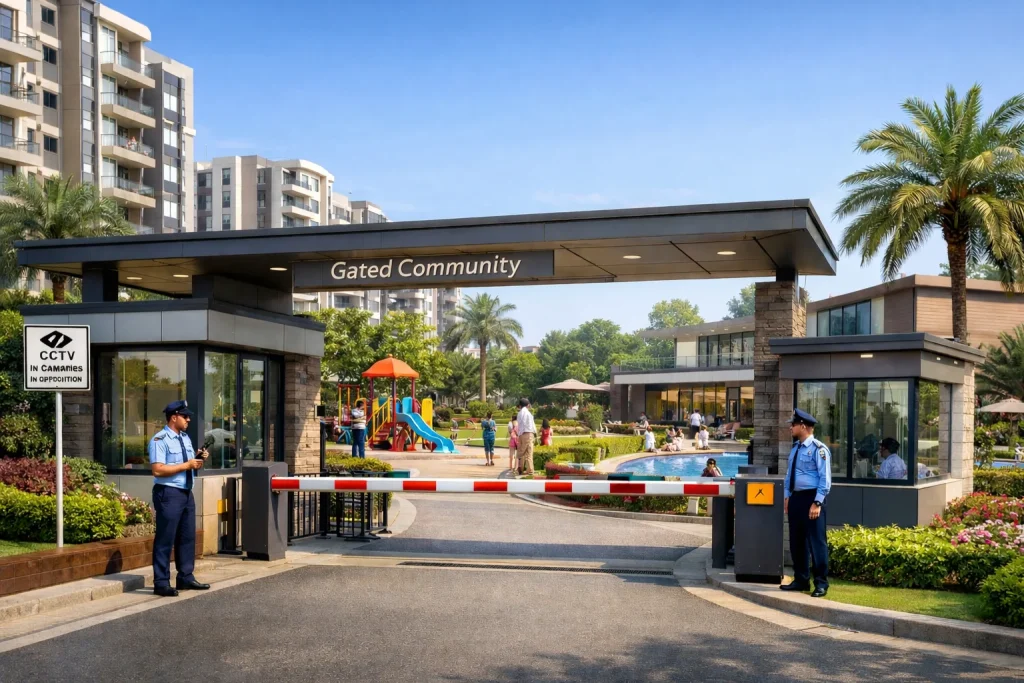
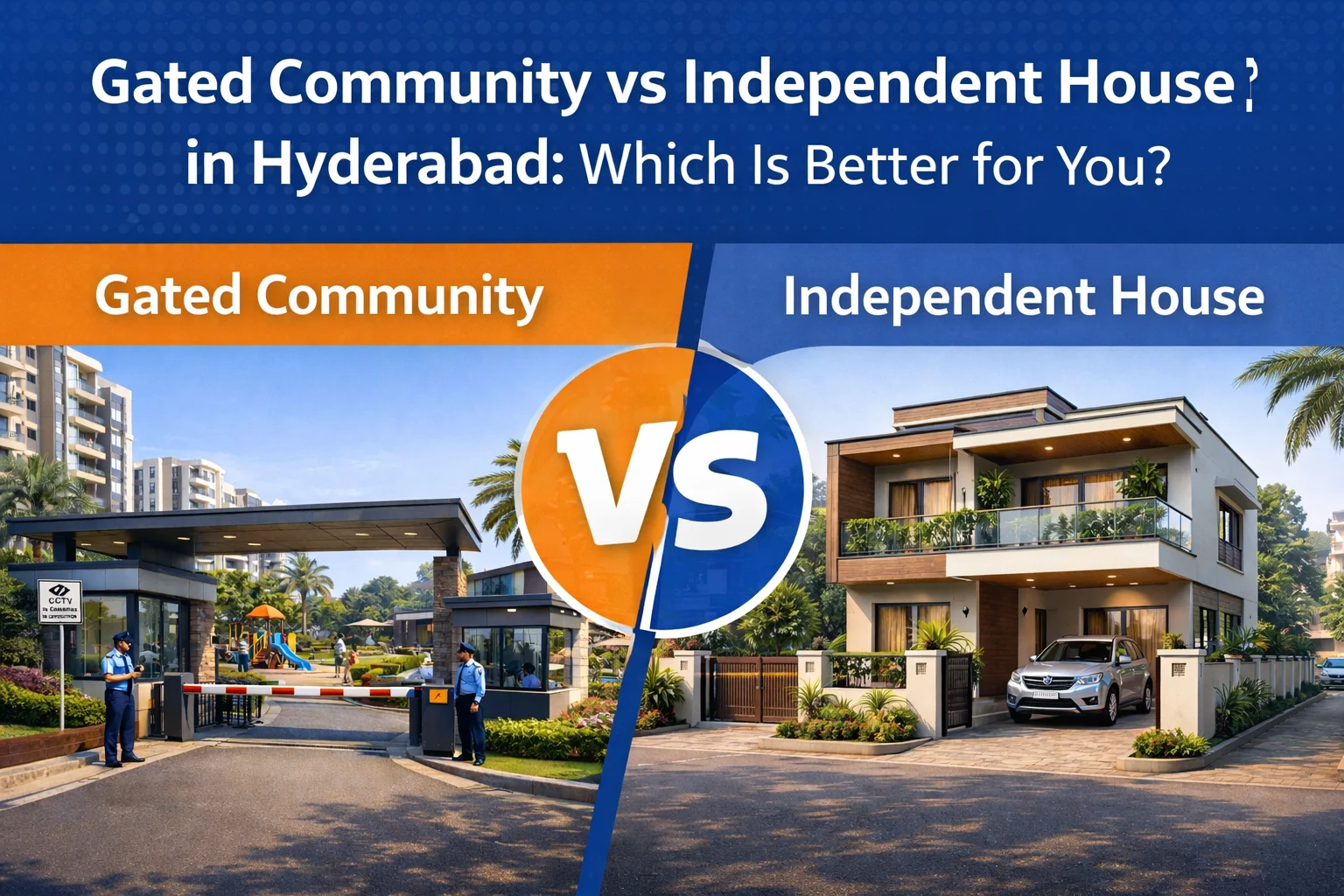
A gated community is a residential enclave with restricted access through guarded gates, boundary walls or fences, and internal roads reserved for residents and their guests. These projects typically offer multi‑layer security with CCTV cameras, controlled entry, and on‑ground guards to monitor visitors and deliveries. In Hyderabad, many gated communities include apartments or villas along with shared amenities such as clubhouses, pools, gyms, walking tracks, and children’s play areas.
Gated projects are usually developed by branded builders over large land parcels on the city’s outskirts or growth corridors like Gachibowli, Mokila, Kokapet, LB Nagar, and emerging HMDA layouts. Because of their organized infrastructure, including wide internal roads, underground utilities, and power backup, they are positioned as lifestyle products rather than just basic housing.
What Is an Independent House in Hyderabad?
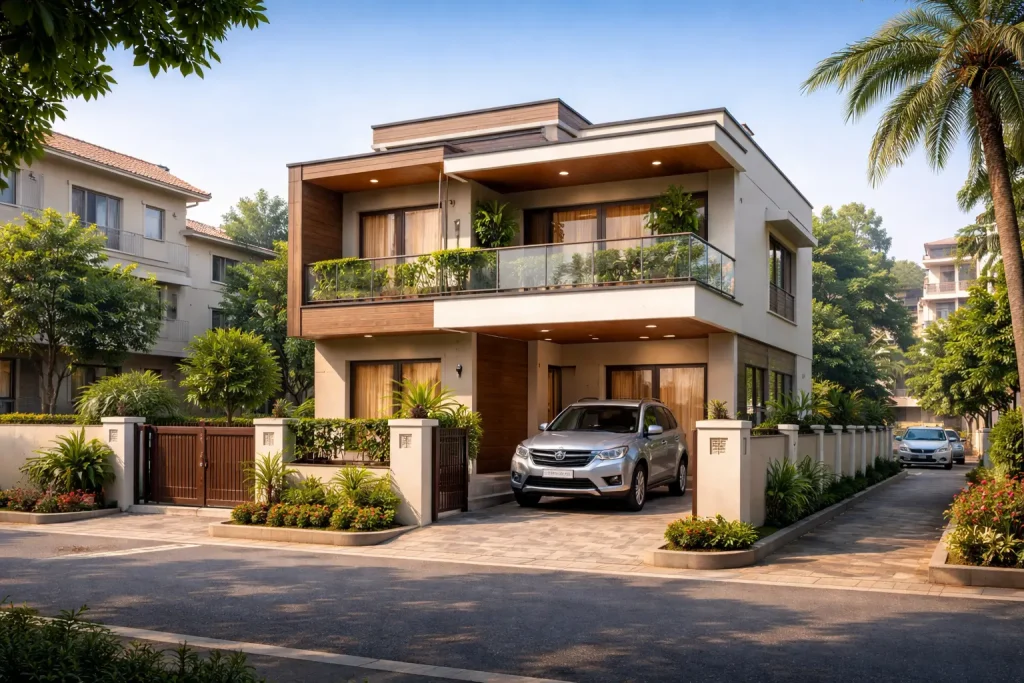
An independent house (or individual house) is a standalone residential building constructed on its own plot, often in established colonies within GHMC or HMDA limits. The owner controls the building design, internal layout, and future modifications, subject to local building rules and sanctioned plans. Such houses may be part of older low‑density neighborhoods with ready civic and social infrastructure, but usually lack gated security or shared amenities.
In Hyderabad, independent houses must comply with HMDA/GHMC building regulations on setbacks (minimum open spaces from plot boundaries), height, and plot coverage, and permissions are issued through TS‑bPASS. Typical residential plots between about 100 and 400 square meters must maintain 2–4-meter setbacks on all sides, and deviations beyond permissible limits can attract penalties or even demolition.
Security and Lifestyle: Safety vs Freedom
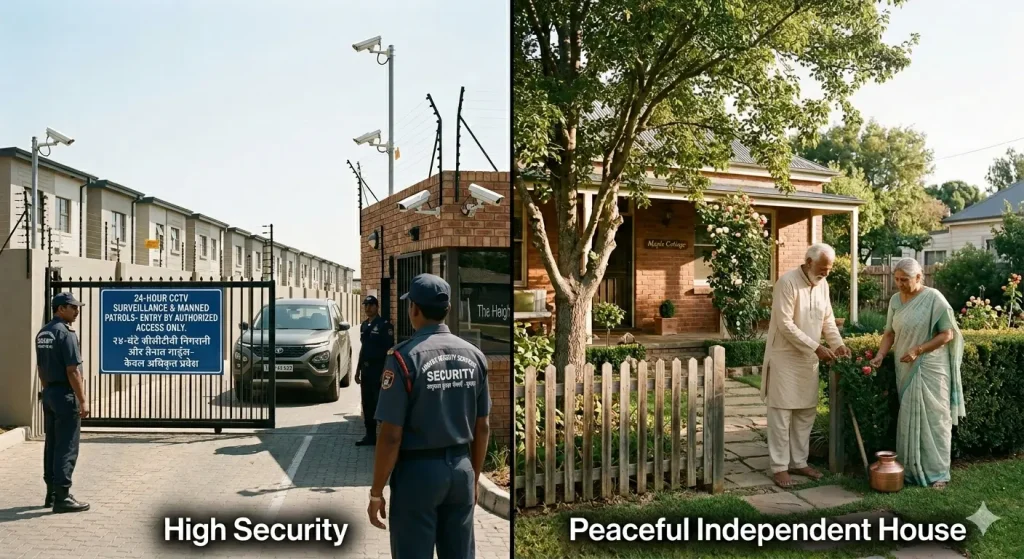
Security is the strongest selling point of gated communities in Hyderabad, as they offer controlled entry, 24×7 surveillance, and on‑site security personnel. For families with children or working couples, this reduces everyday stress and allows kids to play freely within the campus. Many projects add advanced features like video door phones, biometric access, and emergency response systems, which are difficult and costly to replicate in a single independent house.
Independent houses offer greater privacy and fewer day‑to‑day restrictions because owners are not bound by a resident welfare association (RWA) or community by‑laws for internal use of the home. However, security depends entirely on what the owner arranges—such as compound walls, individual CCTV cameras, or private security—which may still not match the layered protection of a well‑managed gated society. For people who value personal space, reduced interference from neighbors, and the ability to set their own rules, an independent house can feel more liberating despite higher security responsibilities.
Location and Connectivity Patterns
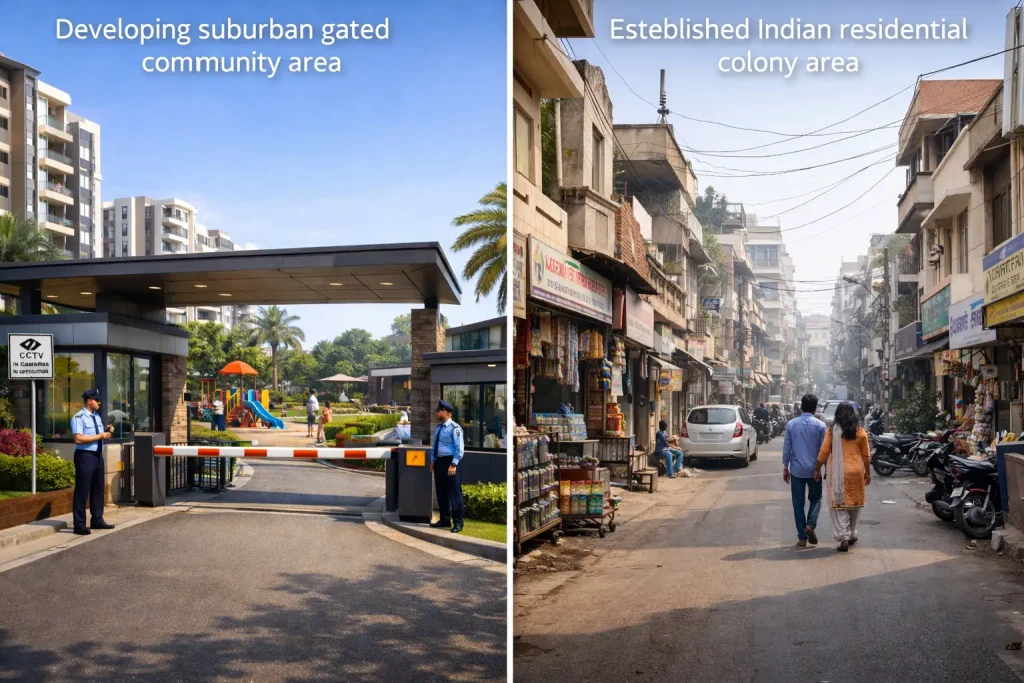
Large gated communities require sizeable land parcels, so many projects are located in developing corridors or peripheral zones where such tracts are available. This often means better internal planning but sometimes weaker surrounding social infrastructure initially, with fewer shops, schools, and hospitals within walking distance in early years. Over time, however, successful gated projects can attract commercial development around them, improving livability and pushing up property values.
Independent houses are often found in older, established colonies where land is already subdivided into smaller plots and social infrastructure is mature. Buyers in such areas benefit from proximity to local markets, schools, and religious institutions, but may face narrower internal roads and limited parking compared to planned gated layouts. Finding large vacant plots in prime, low‑density city locations has become increasingly difficult and expensive, which limits supply of new independent houses in central areas.
Space, Customization, and Regulatory Compliance
A key advantage of an independent house is flexibility in design and future expansion, since owners can plan additional floors or rooms as long as they follow HMDA/GHMC rules and obtain revised permissions. Owners can choose unique elevations, internal layouts, and landscaping without needing approval from a community architect or design committee, unlike in many gated projects. This makes independent houses attractive for multi‑generation families who anticipate the need to modify or extend the structure over time.
At the same time, independent houses carry the full responsibility of regulatory compliance on setbacks, height, and fire access, with penalties for violations enforced by HMDA and GHMC. Gated communities are typically pre‑approved master layouts, so individual homebuyers within them face fewer direct approvals, though they also have less freedom to alter exteriors or common areas. For buyers who prefer a plug‑and‑play lifestyle with standardized design and minimal paperwork, a gated community can be more convenient than self‑managed construction on an open plot.
Costs, Maintenance, and Appreciation
Gated communities usually command higher upfront prices per square foot than comparable standalone or older independent properties because of brand value, amenities, and organized infrastructure. Residents also pay recurring maintenance charges and sinking funds to cover security, housekeeping, landscaping, and clubhouse upkeep. For some buyers, these regular fees feel burdensome, but they help preserve the project’s overall condition and attractiveness for tenants and future buyers.
Independent houses may appear more economical on ongoing costs because there is no mandatory association fee, but owners must budget separately for repairs, painting, security, and utility upgrades. In older areas, ageing infrastructure such as drainage or wiring can lead to sudden large expenses, especially if earlier construction was not strictly as per code. However, land‑heavy independent houses in prime or central localities can command strong resale values because the underlying plot becomes scarcer over time.
Several local market analyses suggest that well‑maintained gated communities in Hyderabad have shown faster capital appreciation than many standalone properties, owing to lifestyle appeal and organized maintenance. One cited example is Knight Frank data indicating annual appreciation of around 8–12 percent for quality gated projects versus 5–7 percent for typical independent properties in the city. For investors focused on rental yields and easier resale, a popular gated community with good connectivity can be a safer choice than a single independent house in a less recognizable lane.
Comparison at a Glance
| Factor | Gated Community (Hyderabad) | Independent House (Hyderabad) |
| Security | Multi‑layer security, CCTV, controlled access. | Depends on individual measures; usually lower overall security. |
| Amenities | Clubhouse, pool, gym, play areas, landscaped parks. | Typically none or very limited unless owner builds privately. |
| Location pattern | Often in growth corridors and large HMDA layouts. | Common in older, established colonies and smaller plotted layouts. |
| Customization | Limited; external changes controlled by association. | High; owner controls design within HMDA/GHMC rules. |
| Maintenance | Centralized, fee‑based, professional management. | Self‑managed; irregular but fully under owner’s control. |
| Appreciation | Often higher due to lifestyle appeal and branding. | Strong where land is scarce and location is prime. |
Which Option Suits You in Hyderabad?
A young nuclear family or working couple that prioritizes safety, child‑friendly spaces, and a ready social circle will typically find a gated community more aligned with their lifestyle. The same is true for investors who want relatively hands‑off rental management, since tenants often prefer modern amenities and predictable maintenance. On the other hand, individuals who value privacy, larger private open spaces, and design freedom may lean toward an independent house despite the additional responsibility.
Senior citizens or multigenerational families might appreciate the medical access and social engagement of a large gated society, but some may still prefer the familiarity of long‑established colonies where services and neighbors are known. Budget is another key filter: in many micro‑markets of Hyderabad, entry‑level tickets for gated projects are higher than basic independent houses in less central pockets, though this varies by locality and builder. Ultimately, the decision should balance current lifestyle needs with long‑term plans for resale, inheritance, or future redevelopment of the property.
Conclusion
Both gated communities and independent houses in Hyderabad can be excellent choices when matched with the right buyer profile, location, and budget. Gated communities offer superior security, amenities, and professional maintenance along with strong appreciation potential in fast‑growing corridors. Independent houses, meanwhile, provide unmatched customization, land ownership, and the charm of established neighborhoods, at the cost of more effort on compliance and upkeep.
For homebuyers and investors, the most practical approach is to shortlist specific micro‑markets, compare real project options in both categories, and evaluate them on security, commute, community, regulatory clarity, and exit potential before committing.